SSS TECHS
Menu

Open source

Public-interest analytics with inspectable methods.

OceanWatch leads this page as a community-facing maritime analytics project for illegal-fishing risk awareness and marine protection review. Supporting public projects show the same standards of reproducibility, diagnostics and responsible analytical software design.

Featured community service

OceanWatch: public-interest maritime analytics for illegal-fishing risk awareness.

OceanWatch is presented first because it is the most serious public-service project on this page: a transparent way to inspect vessel movement, protected-area context and explainable risk indicators without hiding the logic behind a closed system.

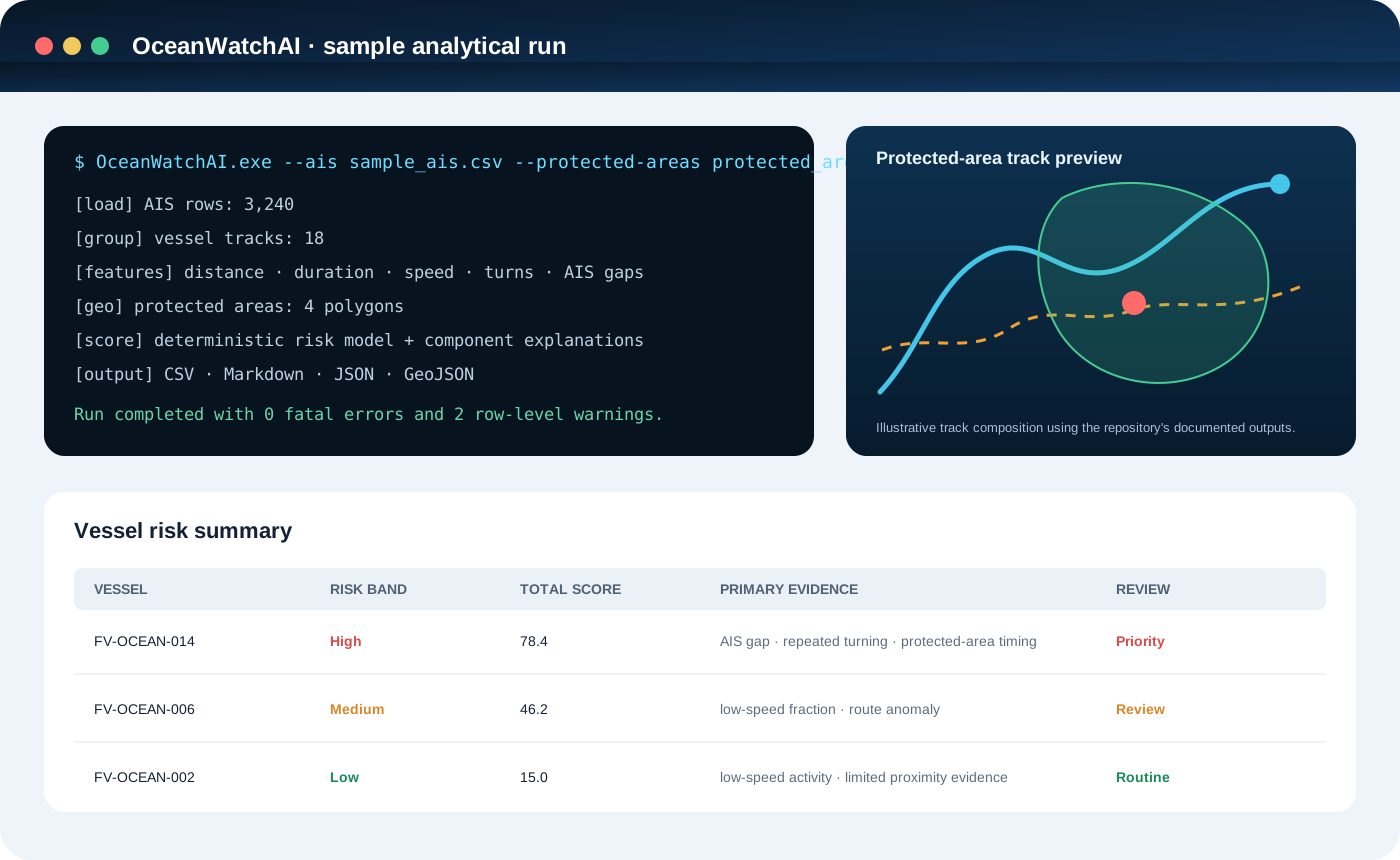
OceanWatch analytical run showing terminal execution, protected-area vessel track and explainable vessel risk summary.

OceanWatch is an ongoing open-source project. We welcome collaboration with researchers, conservation groups, maritime analysts and community organisations interested in transparent tools for marine protection and illegal-fishing risk awareness.

Engineering projectMIT licence

OceanWatch

OceanWatch is a public-interest maritime analytics project for inspecting AIS vessel tracks, protected-area proximity and behaviour-based risk indicators that may support community awareness around illegal fishing and marine protection.

What you can inspect
AIS track ingestionProtected-area geometryExplainable risk indicatorsCSV, Markdown, JSON and GeoJSON outputsModern C++20 and CMakeCatch2 tests
Quantitative research and validation

Reproducible implementations with diagnostic discipline.

These repositories show how numerical models and performance frameworks can be tested, interrogated and communicated rather than presented as unexplained outputs.

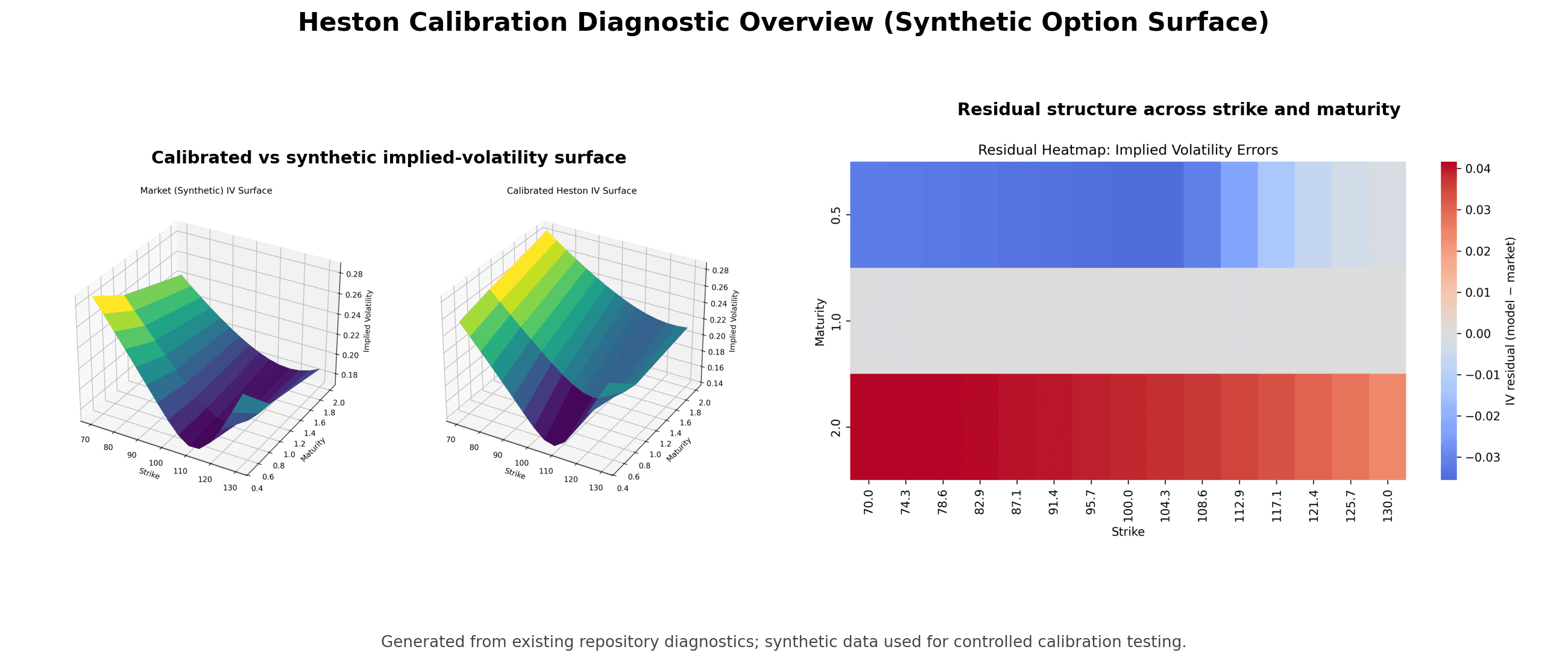
Heston calibration diagnostic overview with implied-volatility surfaces and residual heatmap.
Quantitative researchMIT licence

Heston Model Calibration

A stochastic-volatility calibration workflow combining Fourier pricing, constrained optimisation, residual diagnostics, parameter sensitivity and multi-start robustness checks.

What you can inspect
Numerical optimisationResidual diagnosticsSurface-fit analysisModel-risk notes
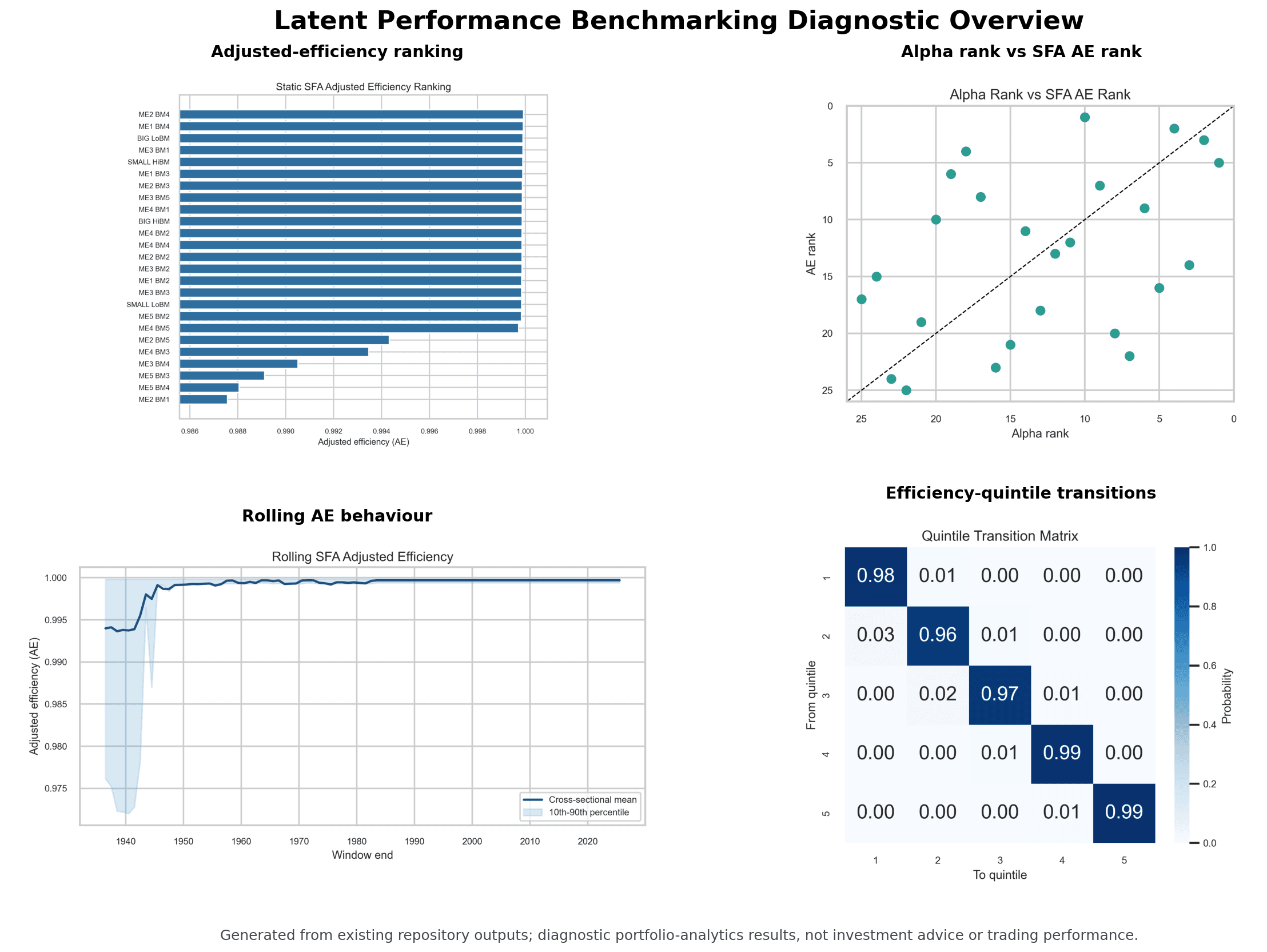
Latent performance benchmarking diagnostics with rankings, rank disagreement, rolling efficiency and transition matrix.
Quantitative researchMIT licence

Latent Performance Benchmarking

A risk-adjusted portfolio benchmarking framework using latent-performance decomposition, rolling persistence, transition analysis and ranking-stability diagnostics.

What you can inspect
Adjusted-efficiency rankingsPersistence analysisTransition matricesRanking disagreement

How we work in public

Inspectable repositories are useful only when the reasoning is visible.

Across sectors and programming languages, the same standards recur: controlled inputs, explicit assumptions, reproducible commands, diagnostic evidence and honest limitations.

Reproducible workflows

Documented setup, sample data and repeatable commands make results easier to verify.

Automated tests

Focused tests protect core calculations, data handling, edge cases and output contracts.

Diagnostic evidence

Plots, residuals, sensitivity checks and conservation tests reveal how models behave.

Documented assumptions

Methodology, configuration and interpretation are written down rather than hidden in code.

Explicit limitations

Research, demonstrator and prototype boundaries are stated without inflating maturity or impact.

Open licensing

Verified licences make the reuse and inspection terms clear for public repositories.

Commercial bridge

Need similar analytical capability for your organisation?

Public repositories show the methods. A consulting engagement adapts those methods to your data, security requirements, operating context and decision process.